i337 Book a call

How we do it

Six weeks to find what could grow revenue. Then your managers fix it, every day.

Most companies try to grow by adding: more people, more ads, more tools. i337 starts with what you already have.

One product, 12 weeks. i337 Signal finds what slows your company's growth, and what each fix is worth. i337 Structure helps your managers fix it, every day.

After six weeks, you haveThe changes that would grow revenue most, ranked, with the evidence behind each. What each one is worth, estimated in rupees from your own numbers. A decision, with an i337 facilitator, on what to address first.
Then, with StructureA six-week sprint: managers working on the selected fixes, one action a day, with progress updated every week.

See it in a minute

A finding, not an opinion.

A pattern becomes a finding when people across teams describe it independently, it keeps recurring, and we can trace how it affects the company's target.

In our last engagement:

Every finding is backed by evidence from across the company. Each is ranked by importance, with a recommendation on what to address first.

The revenue estimate is based on your company's numbers. It shows what addressing the findings could be worth. Actual impact is measured after the changes are made.

Four lenses. One company target.

Signal examines the company through four lenses to find where the gap sits.
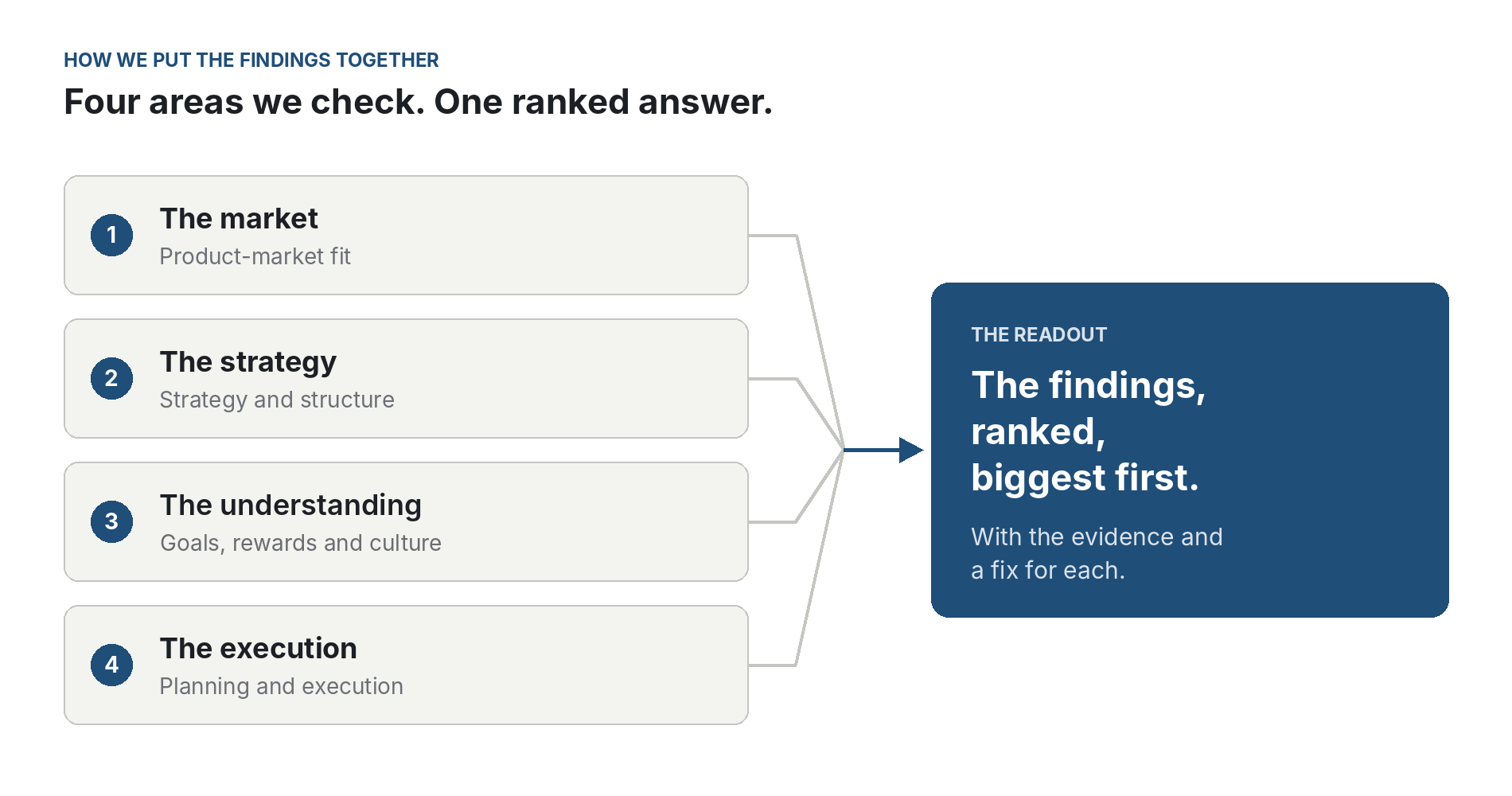
Four lenses: the market, the strategy, the alignment, the execution, leading to the findings ranked, biggest first
MarketIs there enough demand for what you're selling?
StrategyIs your plan capable of reaching the target?
AlignmentDo people understand the target? Do their goals, incentives and priorities support it?
ExecutionIs the work happening as planned? Where does work slow down?

Together, these four lenses show whether the gap comes from the market, the plan, how people understand it, or execution.

Six weeks of Signal. Then Structure.

Weeks 1 to 6

i337 Signal

Find what's shaping your company's results.

  • Week 1: Setup and leadership mapping
  • Week 2: Interviews across the organisation
  • Weeks 3 to 5: Daily check-ins: did the planned work happen, and if not, what got in the way
  • Week 6: Findings, recommendations and the leadership readout

Time from each participant: about one and a half to two hours across six weeks.

From week 7

i337 Structure

Help managers act on what Signal finds.

  • Week 7: Setup. Objectives, metrics and the working week are agreed.
  • Weeks 8 to 10: Managers run the weekly goal and daily action loop, with i337 and the sponsor reviewing progress every Friday.
  • Weeks 11 and 12: The sponsor runs the weekly review on their own.
  • Week 12: i337 checks progress on each fix and reports follow-through.
  • After week 12: Continuing with a Structure subscription is a separate conversation.

Time from each manager: about 5 minutes for the weekly goal and 2 minutes per working day.
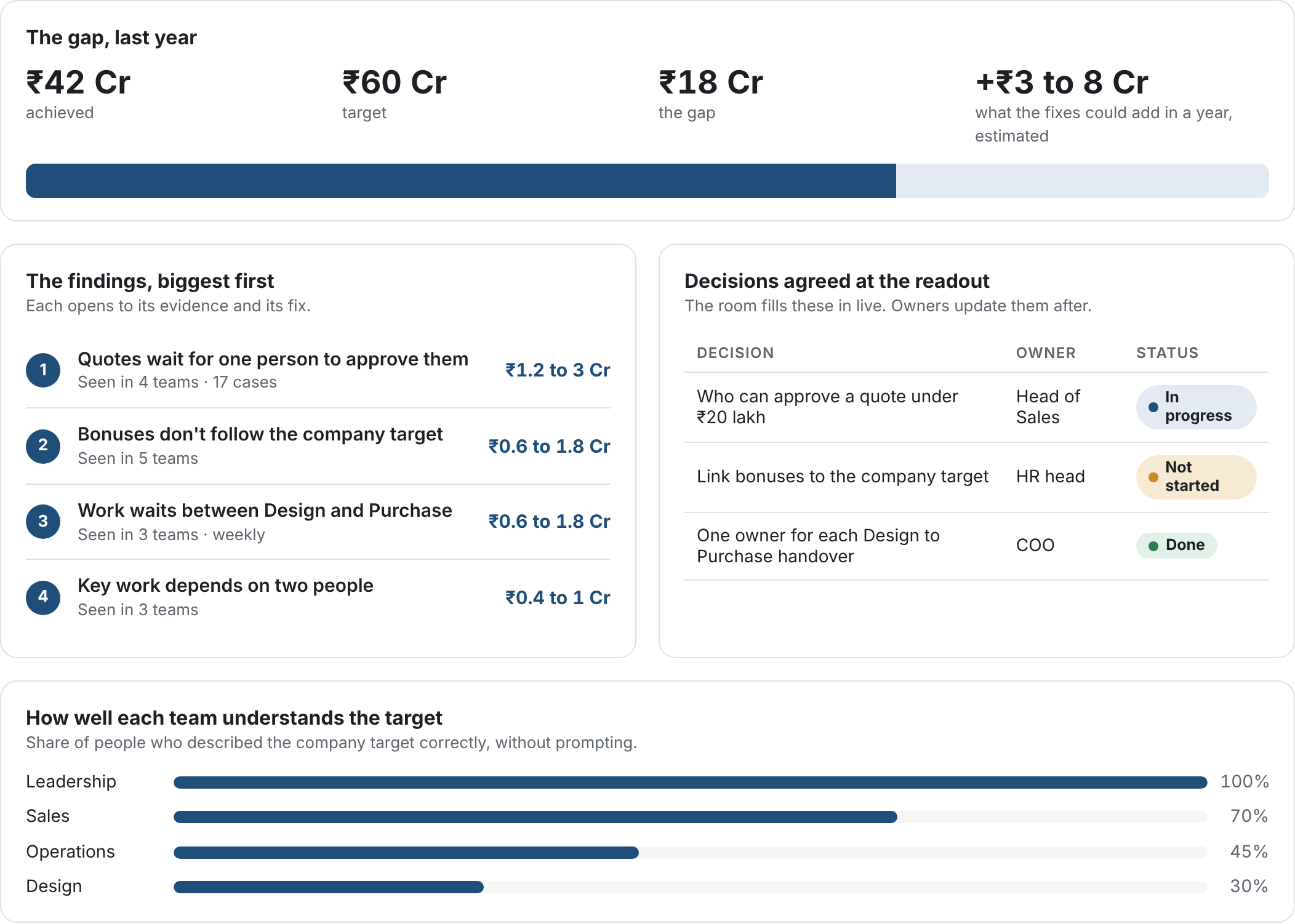
Everything you need to decide what to address first.

  1. A company-wide view. A dashboard showing where the gap sits across the four lenses: Market, Strategy, Alignment and Execution.
  2. Findings ranked by importance. Each finding includes the evidence, what it affects, and a recommendation on what to address.
  3. The revenue opportunity. An estimate of what addressing each finding could add to revenue, calculated using your company's numbers.
  4. A leadership readout. A facilitated session with senior leadership to review the findings, understand what they mean, and decide what to address first.
Signal dashboard: the gap to target, findings ranked with what each could add, decisions agreed at the readout, and how well each team understands the target
The Signal dashboard. Illustrative example, sample data.
You also receive a written diagnostic report and a one-page decision sheet, ready to share with your leadership team or board.

Your managers know what to work on. And do it.

i337 Structure takes the findings from Signal and helps managers turn them into weekly goals and daily actions.

Every weekEach manager gets a proposed goal for the week, based on their objective, last week's check-ins and any open blockers. The manager agrees or edits it.
Every dayEach manager has one daily action tied to their weekly goal. The action stays fixed for the week. Managers check in themselves on whether it happened. If a priority changes from above, they record it, and the miss isn't theirs.
When work is blockedManagers flag what they're waiting on and who they're waiting on. Anything past the agreed response time appears in the weekly review, including what's waiting on leadership.
When work keeps going off trackAfter two weeks running below half the planned days, an i337 facilitator speaks with the manager, not their line manager, to find out why: too much on their plate, a priority that keeps changing, a decision they're waiting on, or a skill they need.
Every weekYou see which fixes are moving, and where they're stuck. At Week 12, i337 checks with the people affected to see what has changed.
By Week 11Your sponsor runs the weekly review without i337. The rhythm stays inside the company.

Managers remain responsible for their work. Structure gives them a clear goal, one daily action and a way to check their own progress. Your sponsor sees how each manager's week is going; each manager sees their own. No rankings, no comparisons.
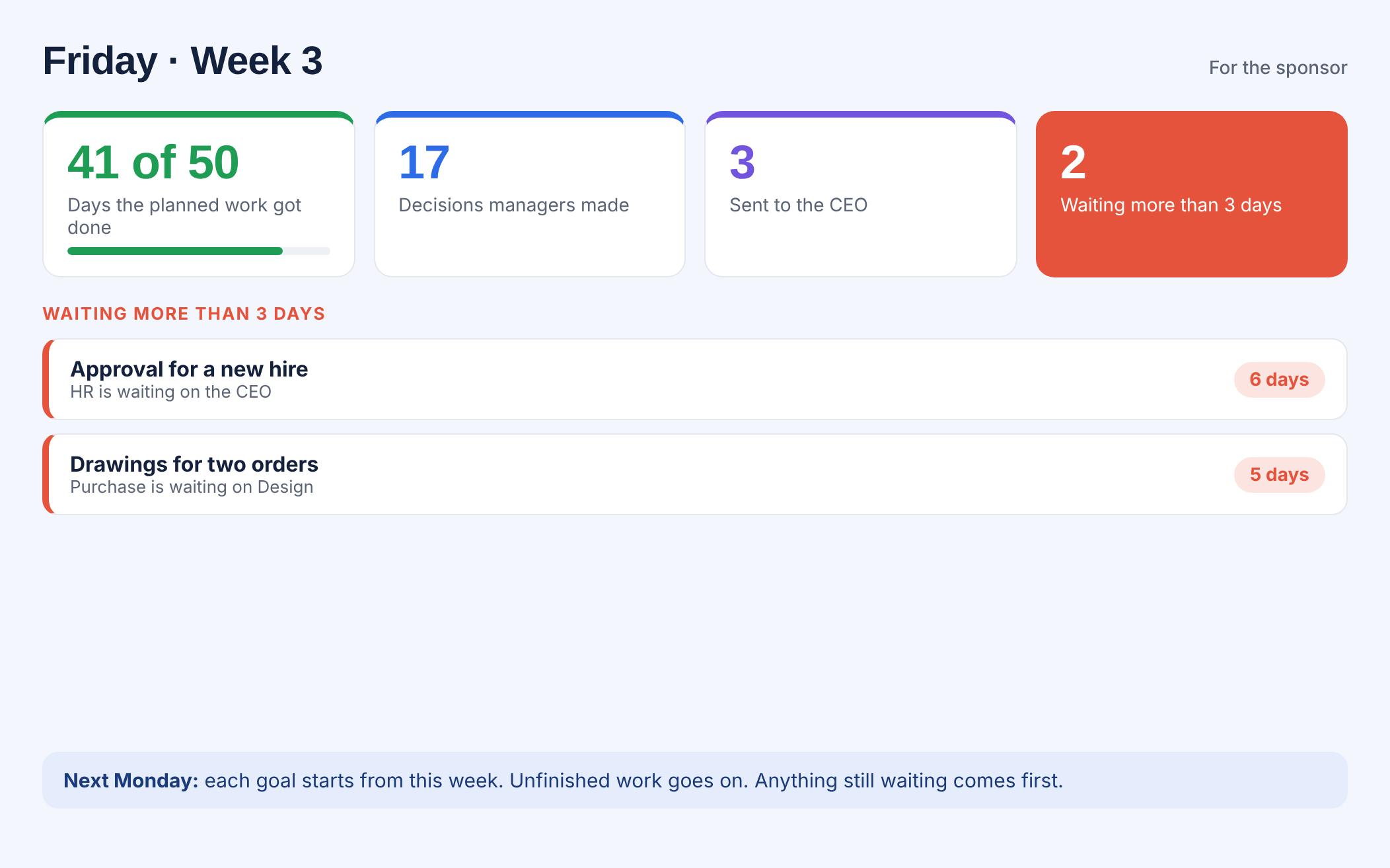
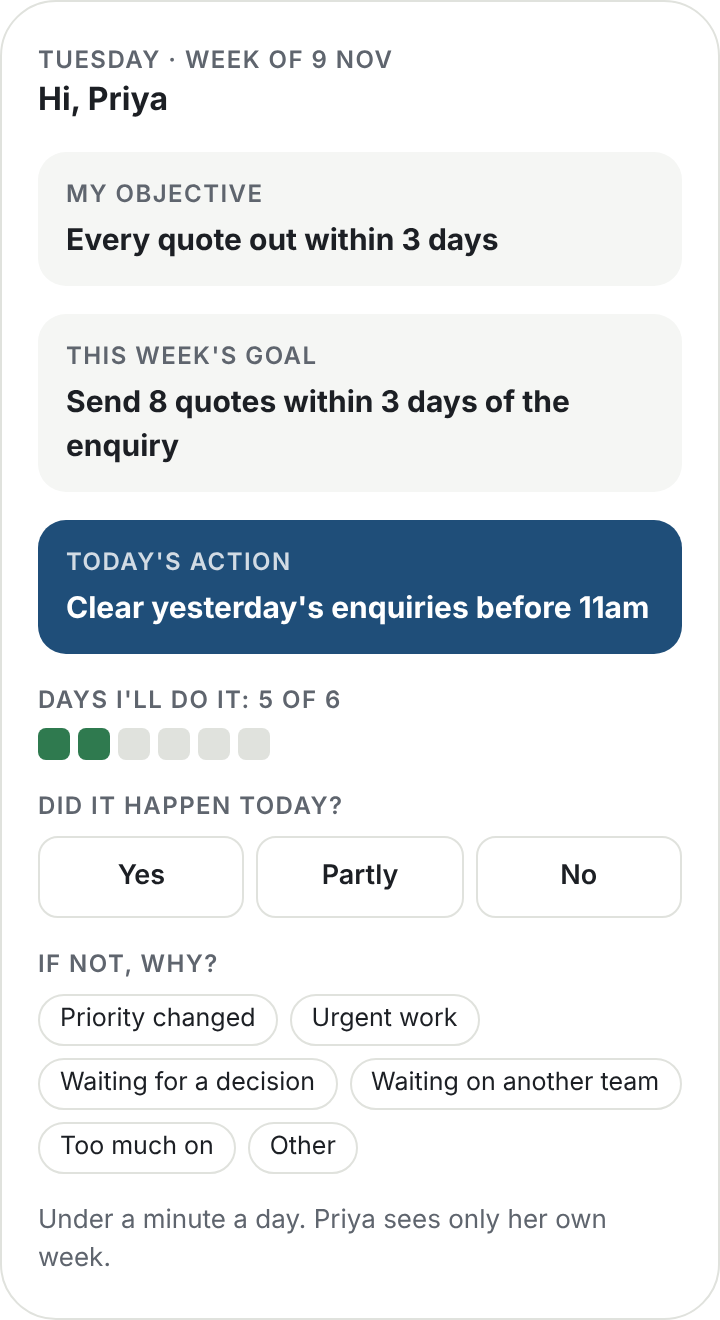
Structure dashboard: each manager's weekly goal, daily actions done across the week, and blockers waiting for a decision
A manager's phone view: objective, this week's goal, today's action and a one-tap check-in
What you see, and what each manager sees on their phone. Illustrative example, sample data. In development.

Why i337?

01Evidence, not opinionEvery finding must pass a fixed evidence test. The diagnosis rests on what people across the company report and what their daily work shows.
02A financial lensEvery finding comes with an estimate of its potential revenue impact, calculated using your company's numbers.
03Your people, your solutionsThe people who understand your company best are already inside it. Signal finds what needs attention. Structure helps your managers take ownership of it.
04In your team's languageInterviews and check-ins in English, Hindi and Kannada, so people at every level can answer. More languages as facilitators join.

A fixed fee, agreed up front.

One engagement, 12 weeks

A fixed fee based on company size and scope, covering i337 Signal (weeks 1 to 6) and the i337 Structure sprint (weeks 7 to 12).

  • Payment schedule set out in your proposal

After week 12

Continuing with a Structure subscription is a separate conversation, once you've seen the sprint work.

The cost: a fraction of what a large consultancy charges for comparable work.

A 100-person manufacturer. Ten years at 60 to 70% of target.

For a decade, the company had been falling short of its target. Leadership had theories about why.

In six weeks, i337 examined the company across 12 departments and more than 50 people. 96 patterns tracked. 42 passed the evidence test. 6 key findings.

What we found

Bonuses were tied to goals unrelated to the company target.People could achieve their individual goals and earn their full bonuses while the company continued to miss its number.
Decisions were holding up customer quotes.A custom quote needed a cross-functional meeting. Repeated rescheduling delayed decisions, and ten stalled quotes surfaced.
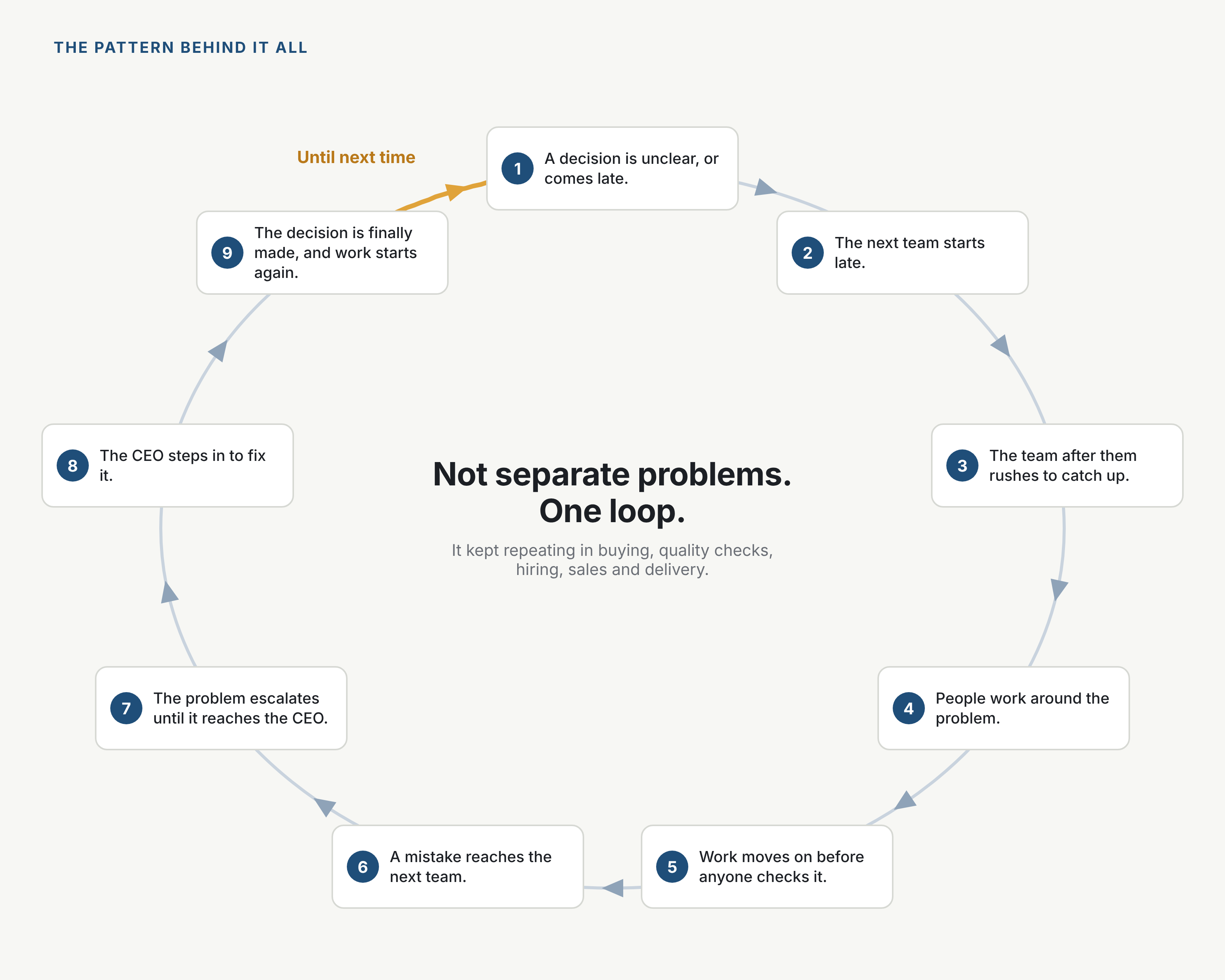
The pattern behind it all: nine steps in a loop, from a late decision to the problem escalating to the CEO, until next time
What addressing the findings could be worth: an estimated 40% in additional annual revenue, from the company's own numbers. The CEO's own estimate was more than double. This is an estimate, not realised revenue. Actual impact will be measured after implementation.

Built by someone who has owned revenue targets for 12+ years.

Sachin, founder of i337

I'm Sachin, founder of i337.

At Yahoo! and InMobi, I ran campaigns and worked on the ground. At Airbnb, I grew India's supply and received global awards for innovation and scalability.

I was VP of Sales and Marketing at DataWeave, then COO and CEO at Flatchat, where I redesigned operations and cut costs by 65%.

At Unacademy, I was Chief of Staff to the CEO. My audits changed how the company worked. When the head of sales left, I took over. The team had its best month yet.

Across these roles, I consistently found what had the greatest impact on the numbers and worked with the people already there to improve them.

That's what led me to build i337. More about Sachin

Questions

How long does it take?

Twelve weeks: six for Signal, then a six-week Structure sprint. Continuing after that is a separate conversation.

What do you need from us?

A clear target, time with you at the start and at the readout, and participation from people at every level. Each participant spends about one and a half to two hours across the six weeks.

Who takes part?

Your team proposes the list, and we check it covers each function and every level, from the head of each team to the front line.

What if we already know the problem?

We start with the evidence either way. It helps establish what's holding growth back, whether your current understanding holds up, and what to address first.

Will anyone know who said what?

Individual answers are not attributed to named people. Raw interview material is not shared with the company. Findings are reported as patterns, not judgments of individuals. We agree written data-handling terms before we collect anything.

Do you use AI?

Yes, to help read and organise material. The diagnosis follows i337's own method. A person reviews the evidence and decides every finding. We check each service's settings and terms before using it.

Is it only for manufacturing?

No. Our previous engagement was with a manufacturer, but the four areas we examine exist in every company: Market, Strategy, Alignment and Execution.

We're a smaller company. Is this for us?

Signal is built for companies of 25+ employees, with managers between the owner and the work. With fewer than 25 employees, i337 Structure Lite is made for you.

How much does it cost?

It depends on how many people and teams take part. After a 30-minute call, we send you a proposal with the fee.

Do you take a share of the results?

No. Our fee is agreed up front. It doesn't depend on the size of the problem we find or the revenue opportunity we estimate.

Will you guarantee better revenue?

No. We identify what addressing each finding could add to revenue, based on your company's numbers. In our previous engagement, the company's own numbers put the annual revenue opportunity at about 40%. The CEO's own estimate was more than double.

Structure tracks two things: whether managers follow through on their daily actions, and whether each fix is moving. Revenue impact is assessed over the following quarter, not promised up front.

Find the gap. Fix it from within.

For growing companies.

We'll walk you through how i337 works, what we'd look for in your company, and what the engagement would cost.

Or leave your details and we'll reach out.